
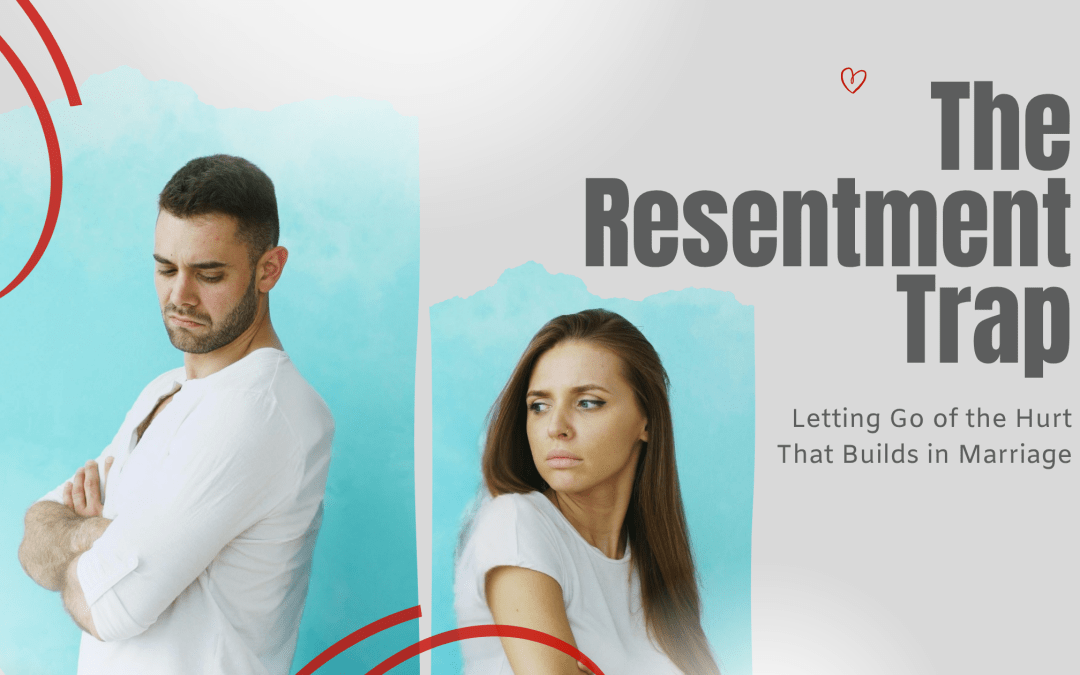
Nobody wakes up one day and decides to resent their spouse. It does not work that way. Letting go of resentment is hard precisely because most couples do not realize how much they are carrying until it has already changed something between them. It builds slowly, the way a slow leak damages a wall long before anyone notices the problem. A comment that stung but went unaddressed. A disappointment that got buried instead of being talked through. A need that went unmet so many times it stopped feeling worth mentioning.
The hard truth is that most couples carrying resentment are not bad at marriage. They are just tired, and they picked the path of least resistance one too many times. The good news is that letting go of resentment is possible. It is not easy, and it does not happen all at once. But it is one of the most freeing things a couple can do for their marriage.
Where Resentment Comes From
Hebrews 12:15 warns: “See to it that no bitter root grows up to cause trouble and defile many.” That image is worth sitting with. Bitterness does not erupt. It roots. And roots, by nature, grow underground where no one can see them.
Resentment in marriage usually starts with something that felt too small or too risky to bring up directly. One spouse feels chronically unheard. The other never noticed. Expectations existed that nobody spoke out loud. Seasons of stress created emotional distance that couples planned to address later and then never did.
None of those individual moments looks like a big deal in isolation. But together, over months or years, they form a pattern. And patterns shape how spouses see each other. The person who forgot the thing you needed starts to feel like someone who does not care about your needs. The unresolved disagreement starts to feel like proof that you two are fundamentally incompatible.
Recognizing resentment is not a sign of a failing marriage. It is actually the first honest step toward healing. If things have reached a breaking point, the Repair Roadmap is a practical place to start.
What Letting Go of Resentment Actually Requires
This is where most advice on forgiveness falls short: it treats forgiveness like a decision you make once, and then you are done. For small things, maybe. But for the kind of accumulated hurt that builds over years of marriage, letting go of resentment is less a moment and more a practice.
Ephesians 4:31-32 puts it plainly: “Get rid of all bitterness, rage and anger. Be kind and compassionate to one another, forgiving each other, just as in Christ God forgave you.” That standard, forgiving as God forgave, is not a low bar. It is a daily posture.
Biblical forgiveness in marriage does not mean pretending the hurt did not happen or skipping the work of understanding what went wrong. It means refusing to let the wound define the relationship. It means repeatedly choosing not to pick up what you put down.
Talk about it honestly before it calcifies.
Most resentment survives on silence. The hurt stays alive because it goes unnamed, and unnamed things have a way of growing in the dark. When couples bring specific hurts into direct conversation (not as attacks, but as honest disclosures), resentment loses much of its power.
This is harder than it sounds, especially if direct conversation has not been the pattern. If communication breaks down the moment things get emotional, the guide to talking when you’re both overwhelmed gives you a practical framework for those conversations.
Choose forgiveness before you feel like it.
Waiting until you feel ready to forgive is a long wait. Forgiveness usually does not arrive as a feeling first. It arrives as a decision, and the feeling follows later, imperfectly, over time. Colossians 3:13 does not say “forgive one another when the emotions align.” It says bear with each other and forgive. The bearing comes before the breakthrough.
If apology is part of what needs to happen first, The Art of Apologizing is worth reading together. A real apology changes the emotional math of forgiveness.
Bring God into it, not just willpower.
Some hurt is too heavy to move through on effort alone. Prayer is not a soft suggestion here. It is a practical tool. Asking God to help you see your spouse as He sees them, to soften what has hardened in you, to give you access to grace you do not currently feel: that changes things. Many couples find that the spiritual dimension of healing marriage resentment is where the actual turning point happens.
What Changes When You Start Letting Go of Resentment
Couples who work through this describe something they did not expect: relief. Not just in the relationship, but personally. Carrying resentment is exhausting in a way that becomes invisible because it becomes constant. When it lifts, the absence of that weight is noticeable.
Beyond the relief, couples often rediscover things they thought were just gone. Kindness that felt performative starts to feel genuine again. Laughter that had been careful and guarded loosens up. The desire to actually know and be known by your spouse returns. Letting go of resentment does not just stop the erosion. It makes new growth possible.
That is not a small thing. That is a marriage coming back to life.
You Do Not Have to Stay Stuck
Every marriage accumulates hurt over time. That is not a design flaw. It is just what happens when two people live closely enough together to matter deeply to each other. The question is not whether hurt will come in. The question is what you do with it when it does.
If resentment has built up in your marriage and you are not sure where to start, you do not have to figure it out alone. Eagle Family Ministries works with couples through relationship coaching, marriage retreats, premarital coaching, and marriage conferences across the United States. We have walked through this with many couples. Restoration is possible.
Learn more at eaglefamily.org or call 479.464.4442.
For more on conflict, forgiveness, and rebuilding connection, visit the Make Room for Romance blog.